
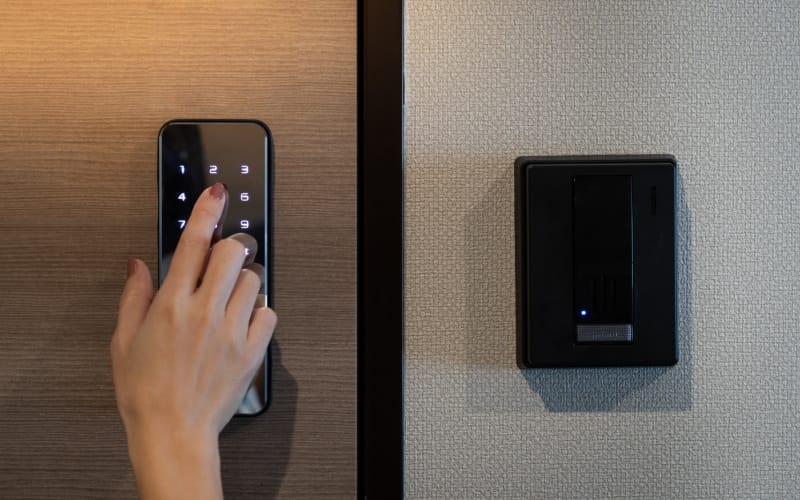
Beyond Passwords: Exploring the Advancements in Biometric Security:
In the rapidly evolving landscape of electronic security, the traditional password-based authentication model is increasingly being challenged by more advanced and reliable solutions. Biometric security, which uses unique physical or behavioral characteristics of individuals for identification, has emerged as a cutting-edge alternative. From fingerprint scans to facial recognition, biometric authentication offers enhanced security, convenience, and a step into the future of safeguarding sensitive information. This article delves into the exciting world of biometric security and explores the advantages it offers over traditional password systems.
The Limitations of Passwords:
Passwords have been the primary method of authentication for decades. However, their vulnerability to various security threats has become increasingly evident. Common issues with passwords include weak and easily guessable combinations, password reuse across multiple accounts, and the potential for brute-force attacks. Furthermore, users often struggle to remember complex passwords, leading to the use of simplistic ones that are easy to compromise.
Enter Biometric Security:
Biometric security offers a breakthrough solution to the limitations of passwords. By using unique biological or behavioral characteristics, it drastically reduces the chances of unauthorized access and ensures a higher level of security.
- Fingerprint Recognition:
Fingerprint recognition is one of the most widely adopted biometric security methods today. It relies on analyzing the patterns of ridges and furrows on a person’s fingertip, creating a unique identifier that is virtually impossible to replicate. From unlocking smartphones to accessing secure buildings, fingerprint recognition has become a standard feature in numerous devices and systems.
Advantages:
- High accuracy: Fingerprint recognition boasts a remarkably high level of accuracy. The chances of a false match are exceptionally low, which means that the likelihood of someone else’s fingerprint being recognized as yours is extremely improbable. This accuracy makes fingerprint recognition a reliable and secure method of authentication.
- Unique and unalterable: Each person’s fingerprint is entirely unique. The intricate patterns of ridges and furrows on a fingertip are formed during fetal development and remain constant throughout a person’s life. Unlike passwords that can be forgotten, stolen, or changed, a person’s fingerprint remains unchanged, making it a highly stable and unalterable identifier.
- Ease of use: Fingerprint recognition is incredibly convenient and easy to use. Users only need to place their fingertip on a sensor or touchpad for a brief moment to be authenticated. This simplicity makes it an intuitive method of verification, even for individuals who may not be tech-savvy.
- Speed: The process of fingerprint recognition is swift. It takes only a fraction of a second for the system to analyze and compare the fingerprint data with the stored template. As a result, users can access their devices, unlock doors, or authenticate themselves with minimal waiting time.
- No need to remember passwords: Since the fingerprint serves as the unique identifier, users are relieved from the burden of remembering and managing complex passwords. This eliminates the common problem of weak passwords due to human tendencies to choose easily memorable combinations.
- Enhanced security: Fingerprint recognition provides an additional layer of security compared to traditional passwords or PINs. Even if someone gains knowledge of your password or PIN, they cannot replicate your fingerprint, significantly reducing the risk of unauthorized access.
- Non-transferable: Fingerprint data cannot be easily transferred or shared among devices or systems. Unlike passwords that can be disclosed or intercepted, a person’s fingerprint remains bound to their physical presence, further enhancing security.
- Integration with various devices: Fingerprint recognition technology can be seamlessly integrated into a wide range of devices, including smartphones, laptops, tablets, and access control systems. Its versatility allows for multi-factor authentication, providing an extra level of security for sensitive data and areas.
- Inclusivity: Fingerprint recognition is generally inclusive and accessible to most individuals, regardless of age or physical abilities. People with disabilities or those who have difficulty using other authentication methods can find fingerprint recognition to be a practical and effective option.
- Cost-effectiveness: As technology has matured, the cost of incorporating fingerprint recognition into devices and systems has decreased. This affordability has contributed to its widespread adoption across various industries and applications.
- Facial Recognition:
Facial recognition is another increasingly popular biometric technology that uses distinctive facial features for authentication. Cameras capture an individual’s face, analyze key points, and create a facial template that is matched against the stored data.
Advantages:
- High accuracy: Facial recognition technology has made significant strides in achieving high accuracy rates. Modern systems use advanced algorithms to analyze key facial features, making it difficult for imposters to deceive the system. High accuracy ensures reliable identification and minimizes the chances of false positives or false negatives.
- Non-intrusive: Facial recognition is a non-intrusive biometric method as it does not require physical contact with the authentication device. Users can be identified from a distance, allowing for a seamless and frictionless experience in various applications, such as access control and surveillance.
- User Convenience: Users find facial recognition to be a convenient method of authentication. Unlike passwords or PINs, which can be forgotten or require memorization, facial recognition leverages a feature user naturally possess – their face. This eliminates the need for users to remember additional credentials and speeds up the authentication process.
- Increased security: Facial recognition adds an extra layer of security compared to traditional methods like passwords or PINs. Since facial features are unique to each individual and difficult to replicate, the risk of unauthorized access is reduced. Moreover, multi-factor authentication can be achieved by combining facial recognition with other biometric methods or passwords for enhanced security.
- Scalability: Facial recognition systems can handle large-scale deployments efficiently. It can process and analyze facial data from multiple individuals simultaneously, making it suitable for high-traffic areas like airports, stadiums, and public spaces, improving security and streamlining access control.
- Versatility of applications: Facial recognition has a wide range of applications. It can be utilized for access control to buildings, unlocking smartphones, securing financial transactions, identifying individuals in surveillance footage, and even personalizing user experiences in retail and marketing.
- Real-time analysis: Facial recognition can provide real-time analysis and alerts, making it invaluable in security and surveillance scenarios. It can quickly identify and notify security personnel of individuals on watchlists or potential threats, allowing for timely responses.
- Forensic and investigative capabilities: In law enforcement and investigations, facial recognition can be a valuable tool for matching suspects to surveillance footage or identifying missing persons. It aids in narrowing down potential leads and expedites the investigative process.
- Potential for contactless transactions: With the rise of contactless payment methods, facial recognition has the potential to revolutionize transactions. Users can make payments with a simple facial scan, eliminating the need for physical cards or smartphones.
- Accessibility and inclusivity: Facial recognition is generally accessible to most individuals, regardless of age or physical abilities. It does not require finding motor skills or physical contact, making it an inclusive method of authentication.
- Iris Recognition:
Iris recognition focuses on the intricate patterns in a person’s, the colored part of the eye encircling the pupil. This method offers a highly accurate and unique biometric identifier.
Advantages:
- High accuracy: Iris recognition boasts one of the highest levels of accuracy among biometric authentication methods. The patterns in the iris are highly complex and unique to everyone, making it extremely unlikely for two irises to be identical. This high accuracy ensures reliable identification and reduces the risk of false positives or false negatives.
- Stability and permanence: The patterns in the iris develop during early infancy and remain stable throughout a person’s lifetime. Unlike other biometric features, such as facial features or fingerprints, which may change with age of injury, the iris maintains its unique characteristics over time.
- Non-intrusiveness: iris recognition is a non-intrusive biometric method. It does not require physical contact with the authentication device, as users only need to look at a camera for a moment. This makes it a hygienic and user-friendly option, ideal for various applications, including access control and time tracking.
- Difficult to forge: The intricate and random patterns in the iris are nearly impossible to replicate or forge. Unlike facial features or fingerprints that can sometimes be mimicked, the complexity of the iris makes it an extremely secure biometric identifier.
- Fast and efficient: Iris recognition provides rapid authentication. The process of capturing and analyzing iris patterns takes only a few seconds, allowing for swift access to secured areas or systems.
- Contactless: Unlike some biometric methods that require physical contact, such as fingerprint recognition, iris recognition is contactless. Users can be identified from a distance, making it suitable for scenarios where touch-based authentication may not be desirable or feasible.
- Suitable for low light conditions: Iris recognition technology performs well even in low-light conditions. The iris has natural features that reflect light, allowing for accurate identification in various lighting environments.
- Scalability: Iris recognition systems can handle large-scale deployments efficiently. They can process and analyze iris data from multiple individuals simultaneously, making them well-suited for high traffic locations like airports and large organizations.
- Inclusive and accessible: Iris recognition is generally inclusive and accessible to most individuals, regardless of age, gender, or physical abilities. It is unaffected by changes in facial appearance and can work with individuals who have vision impairments or wear glasses.
- Cross-platform integration: Iris recognition can be integrated into various devices and systems, such as smartphones, access control systems, and border control checkpoints. Its versatility allows for seamless integration and can be used in combination with other security measures for enhanced protection.
- Voice Recognition:
Voice recognition technology analyzes unique vocal characteristics, such as pitch and tone, to verify a person’s identity. It is often used for phone-based authentication and voice-controlled systems.
Advantages:
- Unique and unalterable: Everyone’s voice has distinct and unalterable characteristics, making it a highly reliable biometric identifier. Factors such as pitch, tone, and cadence create a unique vocal profile that remains consistent over time, providing a stable basis for identification.
- Non-intrusive: Voice recognition is a non-intrusive biometric method. Users can be identified and verified simply by speaking into a microphone, eliminating the need for physical contact with the authentication device. This feature makes voice recognition user-friendly and convenient.
- Convenience and speed: Voice recognition offers a convenient and swift method of authentication. Users can access secured systems or devices by merely speaking, saving time and effort compared to traditional password-based methods.
- Natural interaction: Speaking is a natural and intuitive form of communication, making voice recognition a user-friendly and easily adoptable biometric technology. Users do not need to memorize passwords or remember specific actions, creating a more seamless user experience.
- Accessibility: Voice recognition is inclusive and accessible to most individuals, regardless of age or physical abilities. It can be particularly beneficial for people with disabilities, such as those who may have difficulty with other biometric methods or traditional authentication mechanisms.
- Versatility of applications: Voice recognition has a broad range of applications. It can be used for phone-based authentication, securing access to devices and applications, controlling smart home devices, and even as a second factor for multi-factor authentication.
- Security enhancement: Voice recognition adds an extra layer of security compared to traditional password-based methods. The uniqueness of an individual’s voice and the difficulty in replicating it reduce the risk of unauthorized access.
- Impervious to shoulder surfing: Voice recognition is immune to shoulder surfing, a common method of password theft where individuals attempt to observe or record passwords as they are entered.
- No additional hardware required: Many modern devices, such as smartphones and laptops, come equipped with built-in microphones, eliminating the need for additional hardware for voice recognition authentication.
- Continuous authentication: Voice recognition can be used for continuous authentication, monitoring the user’s voice patterns throughout a session to detect any suspicious behavior or unauthorized access attempts.
- Anti-spoofing measures: advanced voice recognition systems incorporate anti-spoofing measures to detect and prevent fraud attempts, such as voice recordings or synthesized voice attacks.
- Multi-factor authentication: Voice recognition can be used as part of a multi-factor authentication strategy, combining it with other biometric methods or knowledge-based factors for enhanced security.
Biometric Security: Advancing Security and Convenience:
Biometric security stands at the forefront of the ongoing revolution in electronic security systems. Its combination of high accuracy, user convenience, and resistance to unauthorized access makes it an attractive alternative to traditional passwords. As technology continues to advance, we can expect even more sophisticated biometric solutions that further strengthen the security of our digital world. However, it is essential to remain mindful of potential privacy concerns and implement robust security measures to safeguard biometric data from falling into the wrong hands.
